
Healthy Weight Calculator
Calculate your BMI and estimated healthy weight range based on your height and current weight.
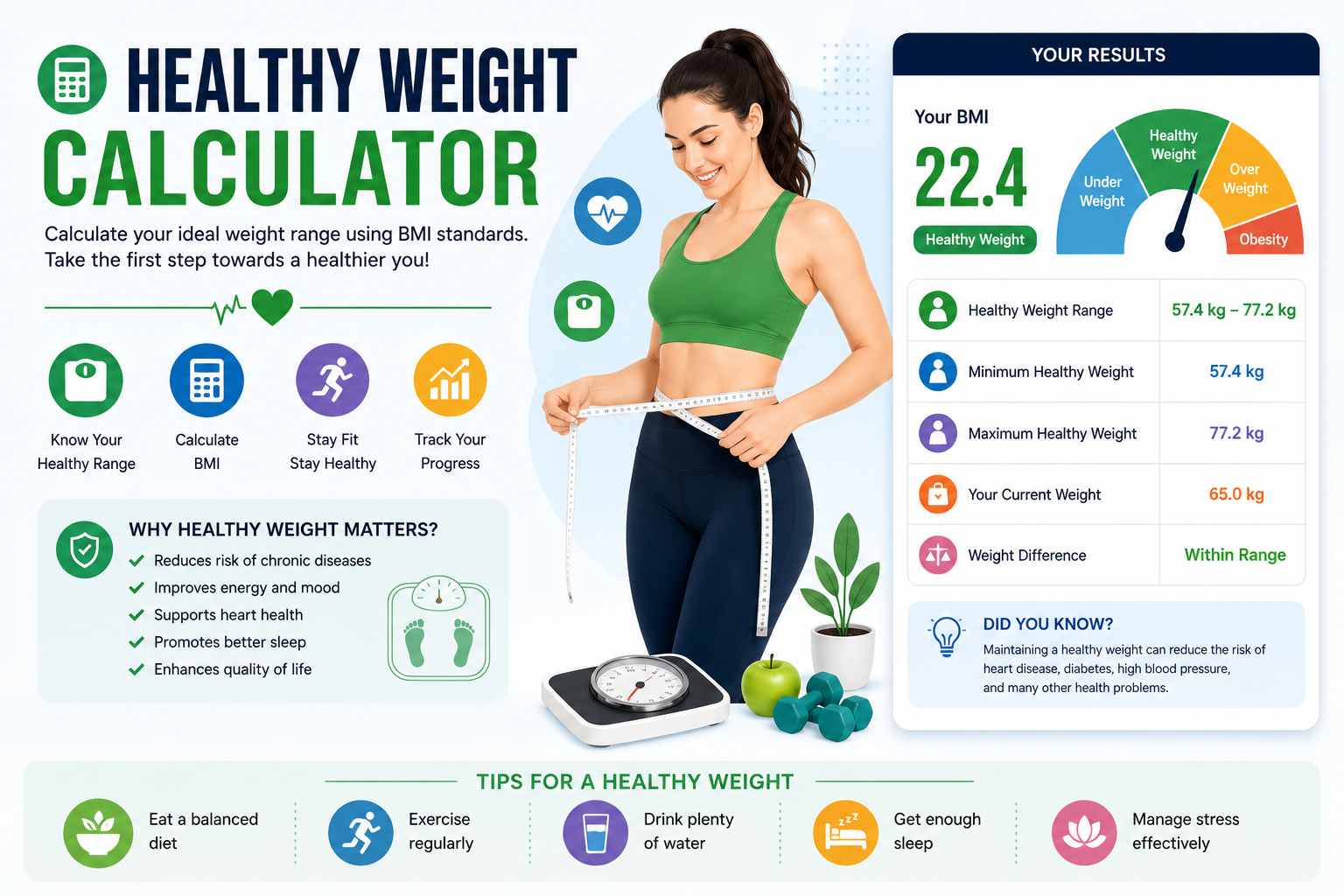
What Is a Healthy Weight Calculator?
A Healthy Weight Calculator is an online tool that estimates the weight range generally associated with a healthy adult Body Mass Index (BMI). By entering your age, gender, height, and current weight, you can see your estimated BMI, BMI category, and the weight range corresponding to the standard adult BMI range.
Knowing your estimated healthy weight range can be a useful starting point when you are working on weight management, fitness, nutrition, or general health goals. Instead of focusing on one exact number on the scale, a healthy weight calculator provides a range based primarily on your height.
This calculator supports both metric and imperial measurements. You can enter your height in centimetres or feet and inches and your weight in kilograms or pounds. The calculator converts the measurements automatically before calculating BMI.
Healthy Weight Calculator for Canada
A Healthy Weight Calculator Canada can be useful for adults who want a quick estimate of their BMI and the weight range associated with standard adult BMI categories. Health Canada classifies adult BMI values below 18.5 as underweight, 18.5 to 24.9 as normal weight, 25.0 to 29.9 as overweight, and 30.0 or higher as obesity.
These categories are useful for screening, but BMI should not be treated as a complete assessment of an individual's health. Health Canada notes that factors such as lifestyle, fitness level and other health conditions should also be considered when interpreting BMI.
How Does a Healthy Weight Calculator Work?
The calculator first converts your height and weight into standard metric units. It then calculates BMI using your weight in kilograms and height in metres.
BMI = Weight (kg) ÷ Height² (m²)
After calculating BMI, the tool estimates the lower and upper weight limits corresponding to a BMI of 18.5 and 24.9. This produces an estimated healthy weight range for the height entered.
Weight = BMI × Height²
For example, if your height is 1.70 metres, the calculator can determine the approximate weight associated with BMI 18.5 and BMI 24.9. Your current weight is then compared with that estimated range.
Healthy Weight and BMI Categories
For adult screening, the commonly used BMI categories are shown below. Health Canada uses the same main BMI cut-offs for adult weight classification.
| BMI | Adult Category |
|---|---|
| Below 18.5 | Underweight |
| 18.5 – 24.9 | Normal / Healthy Weight |
| 25.0 – 29.9 | Overweight |
| 30.0 or higher | Obesity |
BMI categories are screening categories rather than a diagnosis. The CDC also describes BMI as a screening measure that should be considered alongside other health information.
How to Use the Healthy Weight Calculator
Using this calculator is straightforward. Follow these steps:
- Select your gender.
- Enter your age.
- Select centimetres or feet and inches for height.
- Enter your height.
- Select kilograms or pounds for weight.
- Enter your current weight.
- Click Calculate Healthy Weight.
- Review your BMI, BMI category and estimated healthy weight range.
The gender and age fields provide additional personal information, but the standard adult BMI calculation itself is based on height and weight. Adult BMI categories are generally interpreted using the BMI value rather than applying a different BMI formula for men and women.
Example of a Healthy Weight Calculation
Suppose an adult is 170 cm tall and weighs 72 kg.
Height = 1.70 metres
BMI = 72 ÷ (1.70 × 1.70)
BMI ≈ 24.9
A BMI of approximately 24.9 falls at the upper end of the commonly used adult normal or healthy BMI range. The estimated weight range for that height can then be calculated using BMI values of 18.5 and 24.9.
What Is Considered a Healthy Weight?
There is no single body weight that is ideal for every person. A healthy weight depends on several factors, including height, body composition, age, physical activity, genetics and overall health.
For adult BMI screening, the 18.5–24.9 range is commonly used as the normal or healthy weight category. However, this range should be viewed as a population-based screening guideline rather than a personal medical target.
Why Is Maintaining a Healthy Weight Important?
Maintaining a healthy weight can be one part of an overall healthy lifestyle. Excess body weight can be associated with an increased risk of several chronic health conditions, while being underweight can also be associated with health concerns.
Health Canada notes that weight-related health risks can include conditions such as type 2 diabetes, high blood pressure and coronary heart disease, although individual risk depends on more than BMI alone.
- Supports healthy movement and mobility.
- Can support cardiovascular health.
- May help with healthy blood pressure management.
- Can support healthy blood sugar management.
- Supports an active lifestyle.
- Can contribute to long-term health and well-being.
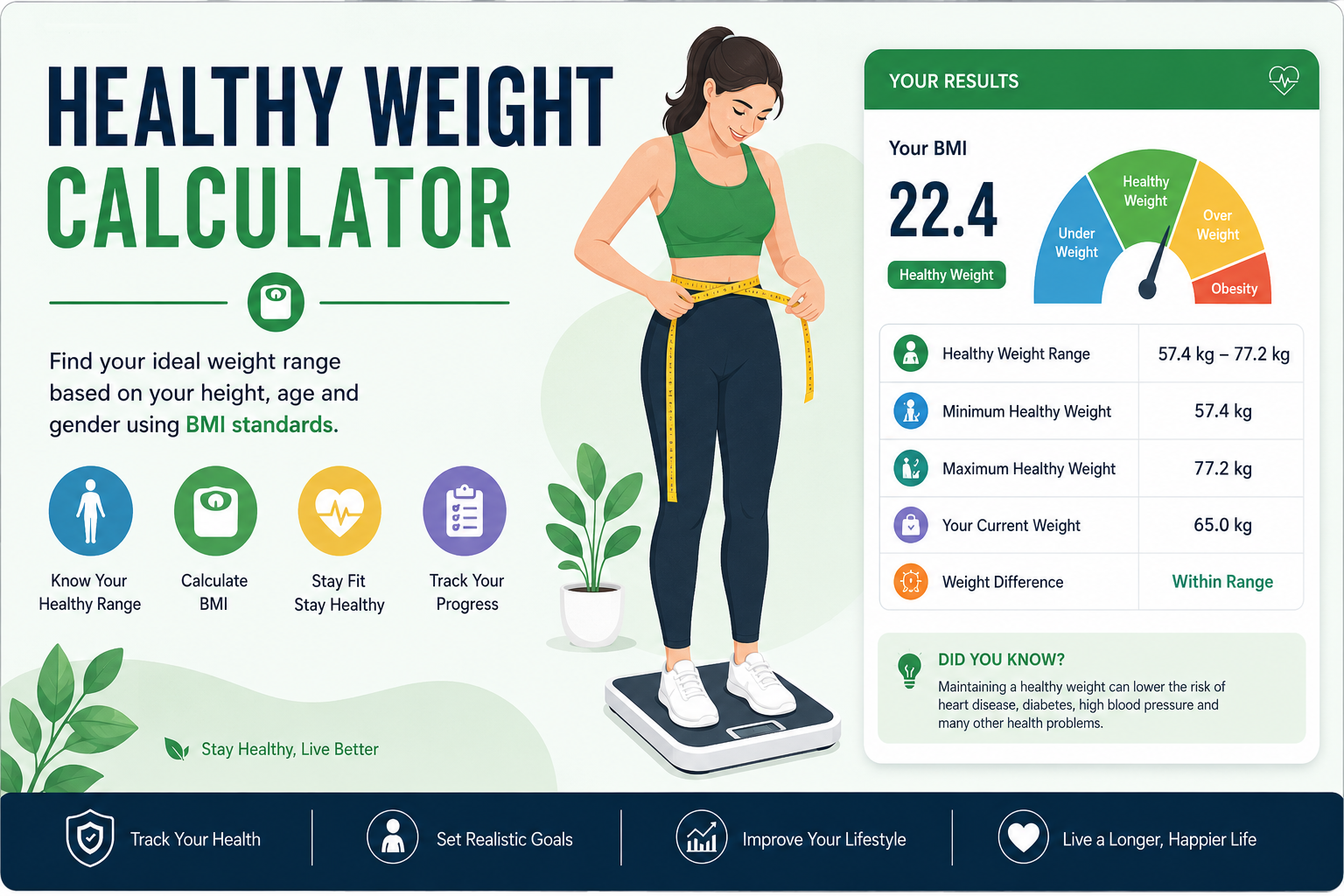
Healthy Weight by Height
Height is one of the most important factors used when estimating a healthy weight range. A taller person generally has a higher weight range corresponding to the same BMI than a shorter person.
This is why comparing your body weight directly with another person's weight is not a reliable way to determine whether your own weight is healthy. The relationship between height and weight is what makes BMI useful as a screening measure.
Healthy Weight for Men
Adult men can use a healthy weight calculator to estimate BMI and the weight range associated with the standard adult BMI categories. However, BMI does not measure muscle mass or body fat directly.
A person who has significant muscle mass may have a higher BMI without having the same body-fat level as another person with the same BMI. For this reason, athletes and highly muscular adults may need additional measures when assessing body composition. Health Canada specifically notes that BMI can overestimate or underestimate health risk in some adults, including highly muscular people.
Healthy Weight for Women
Adult women can also use this calculator to estimate BMI and an associated weight range. The standard adult BMI formula uses weight and height and does not require a separate mathematical formula for women.
Pregnancy and breastfeeding are important exceptions. BMI-based weight assessment should not be used in the same way during pregnancy, and pregnancy weight management should follow appropriate professional guidance. Health Canada notes that its BMI nomogram is not intended for pregnant or lactating women.
Does Age Affect Healthy Weight?
Age can influence body composition, muscle mass and fat distribution. BMI remains useful as a screening tool for adults, but the number alone does not describe every aspect of body composition.
Health Canada also notes that BMI and waist circumference may overestimate or underestimate health risks in some adults, including adults over 65.
Healthy Weight and Body Composition
Body composition refers to the amount of fat, muscle, bone and other tissues that make up the body. Two people can have the same BMI but different amounts of muscle and body fat.
This is one of the main reasons BMI should be interpreted as a screening measure rather than a complete description of health. Waist circumference, physical activity, medical history, fitness and other information can provide additional context.
Factors That Can Affect Healthy Weight
Healthy weight is influenced by many factors beyond height and current weight. These can include:
- Height
- Age
- Sex
- Muscle mass
- Body fat percentage
- Bone structure
- Genetics
- Physical activity
- Dietary habits
- Sleep patterns
- Medical conditions
- Medications and other health factors
BMI Limitations You Should Know
BMI is convenient because it is easy to calculate, but it has important limitations. It does not directly measure body fat and cannot tell where body fat is stored.
BMI can also be less informative for some people, including highly muscular adults, people with very lean body builds, pregnant people and some older adults. Health Canada specifically highlights these limitations.
Children and teenagers should not be assessed using the adult BMI categories used by this calculator. Child and teen BMI interpretation uses age- and sex-specific growth charts.
Healthy Weight Tips
Reaching and maintaining a healthy weight is generally more sustainable when it involves consistent lifestyle habits rather than extreme short-term approaches.
- Eat a varied and balanced diet.
- Include vegetables and fruits regularly.
- Choose nutritious protein sources.
- Include whole grains and other high-fibre foods.
- Drink water regularly.
- Stay physically active.
- Include muscle-strengthening activities where appropriate.
- Get adequate sleep.
- Manage stress in healthy ways.
- Monitor changes in your weight over time instead of focusing on one measurement.
Healthy Weight vs. Ideal Weight
The terms healthy weight and ideal weight are sometimes used interchangeably, but they do not mean exactly the same thing. A healthy weight calculator generally provides a range associated with a particular BMI interval rather than identifying one perfect number.
Your healthiest weight may depend on your body composition, health history, lifestyle and other personal factors. Therefore, the number shown by this calculator should be treated as an estimate and not as a strict target.
Who Should Use a Healthy Weight Calculator?
This calculator is designed primarily for adults who want a quick BMI-based estimate. It may be useful for:
- Adults monitoring their current weight.
- People beginning a fitness program.
- People setting general weight-management goals.
- People comparing their current weight with a BMI-based range.
- Fitness enthusiasts looking for a basic screening estimate.
- Anyone interested in learning more about BMI and healthy weight ranges.
When Should You Talk to a Healthcare Professional?
A calculator can provide a useful starting point, but it cannot diagnose a medical condition or determine your complete health status. Consider speaking with a healthcare professional if you have concerns about significant or unexplained weight changes, eating difficulties, pregnancy-related weight management, chronic health conditions, or your BMI result.
BMI should be considered together with other health information rather than used as the only measure of health.
Frequently Asked Questions About Healthy Weight Calculator
1. What is a Healthy Weight Calculator?
A Healthy Weight Calculator is an online tool that estimates your BMI and the weight range associated with a standard adult healthy BMI range based on your height. It can help you understand how your current weight compares with a BMI-based range.
2. What BMI is considered a healthy weight?
For adult screening, a BMI from 18.5 to 24.9 is commonly classified as normal or healthy weight. BMI below 18.5 is classified as underweight, 25.0 to 29.9 as overweight, and 30.0 or higher as obesity.
3. How is healthy weight calculated?
The estimated healthy weight range is calculated by multiplying the square of your height in metres by the lower and upper BMI values used for the range. For this calculator, those values are 18.5 and 24.9.
4. Can I use pounds and feet instead of kilograms and centimetres?
Yes. This calculator supports both measurement systems. You can enter your height in feet and inches and your weight in pounds. The calculator converts those values before calculating BMI.
5. Is BMI the same for men and women?
The standard adult BMI formula is based on weight and height and is not calculated using a separate formula for men and women. However, body composition can differ between individuals, so BMI should be interpreted in context.
6. Can I use this calculator during pregnancy?
No. Pregnancy requires a different approach to weight assessment. This calculator is intended for general adult BMI-based screening and should not be used to determine an appropriate pregnancy weight target. Health Canada specifically excludes pregnant and lactating women from use of its BMI nomogram.
7. Can children use this Healthy Weight Calculator?
This calculator is intended for adults. Children and teenagers require age- and sex-specific BMI interpretation using growth charts rather than the standard adult BMI categories.
8. Can an athlete have a high BMI and still be healthy?
Yes. BMI does not directly distinguish muscle from fat. A person with substantial muscle mass may have a higher BMI because muscle contributes to body weight. Additional measures may be useful when assessing body composition.
9. Does age affect BMI?
Age can influence body composition and how BMI should be interpreted. BMI remains a useful screening measure for adults, but it does not provide information about muscle mass, body-fat distribution or other individual health factors.
10. Is the healthy weight range the same for everyone?
No. The estimated BMI-based weight range changes according to height. Two people with different heights will generally have different weight ranges corresponding to the same BMI values.
11. Does a healthy BMI mean I am completely healthy?
No. BMI is only one screening measure. A person can have a BMI within the healthy range and still have other health concerns. Lifestyle, medical history, fitness, waist circumference and other factors can provide additional information.
12. Can this calculator tell me my exact ideal weight?
No. The calculator estimates a BMI-based weight range rather than identifying one exact ideal weight. Healthy weight is individual and should be considered alongside body composition, health status and lifestyle.
Conclusion
The Healthy Weight Calculator provides a simple way to estimate your BMI and understand the weight range associated with standard adult BMI categories. By entering your height and current weight, you can quickly see your BMI, BMI category and estimated healthy weight range.
BMI is useful as a general screening measure, but it does not provide a complete picture of an individual's health. Body composition, muscle mass, age, lifestyle, waist circumference, medical history and other factors can affect how BMI should be interpreted.
Use the result as a starting point for understanding your weight rather than as a diagnosis or a fixed target. If you have concerns about your weight, health, pregnancy, significant weight changes or any medical condition, appropriate advice from a qualified healthcare professional is more useful than relying on a calculator alone.