
Use our free Grow A Garden Calculator to estimate your garden area, calculate plant spacing, and determine how many plants may fit within your available garden space. It can be useful for vegetables, flowers, herbs, and fruits.
Grow A Garden Calculator
Enter your garden dimensions and the spacing you want to use between plants to estimate your planting capacity.
Garden Results
What Is a Grow A Garden Calculator?
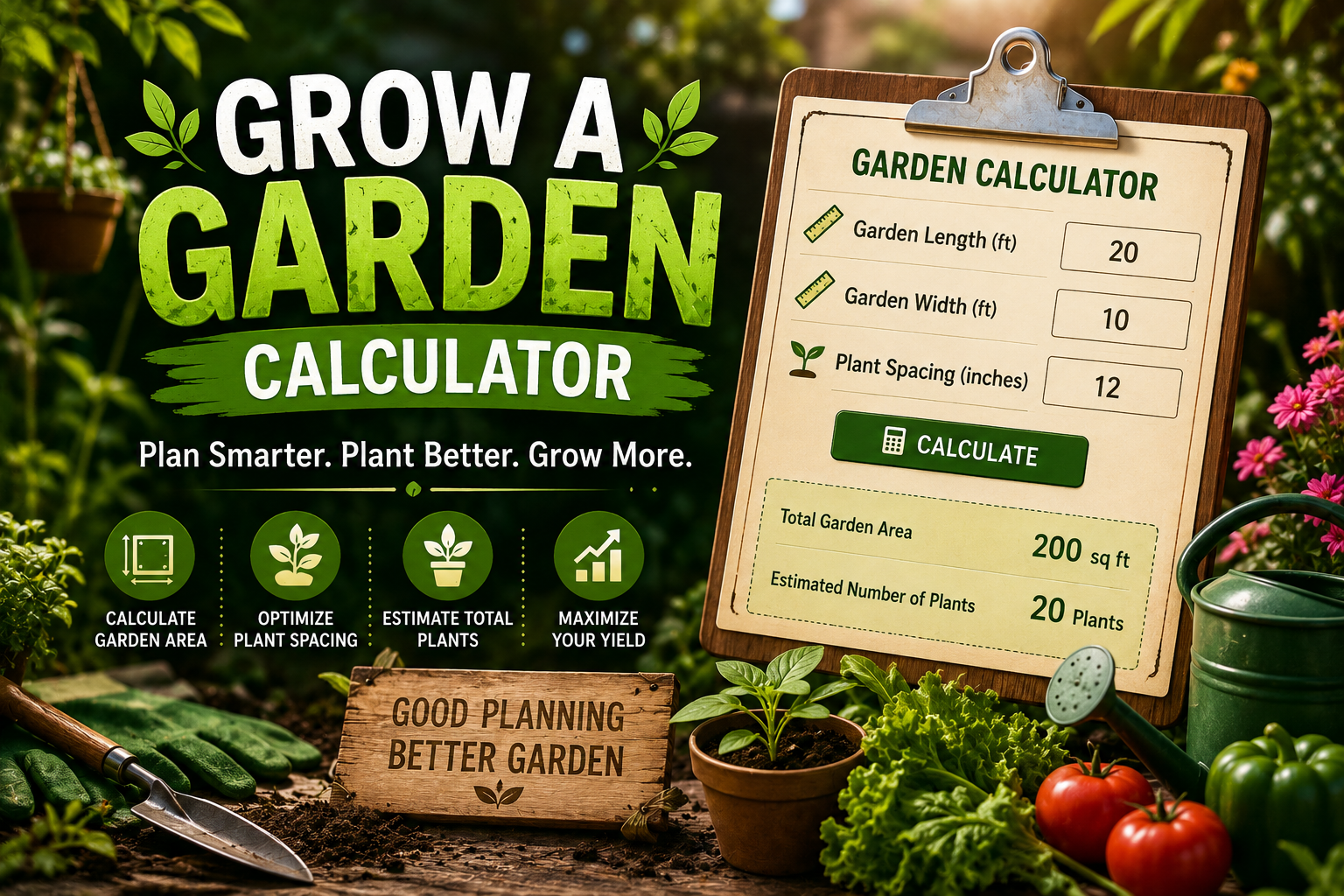
A Grow A Garden Calculator is a practical garden planning tool that helps estimate how much planting space is available and how many plants may fit in a garden based on its dimensions and plant spacing. Instead of estimating everything manually, you can enter the length, width, and desired spacing to get a quick planting estimate.
Garden planning is an important part of successful growing. Plants need enough room for their roots, leaves, sunlight, water, and air circulation. When plants are placed too close together, they may compete for resources and become more difficult to maintain.
How Does the Grow A Garden Calculator Work?
The calculator uses three basic measurements: garden length, garden width, and plant spacing. Garden dimensions are entered in feet, while plant spacing is entered in inches.
First, the calculator determines the total garden area:
The plant spacing is then converted from inches to feet. The calculator estimates the planting capacity by dividing the garden area by the approximate square area required for each plant.
Because real gardens are rarely perfect grids, the result should be treated as a planning estimate rather than an exact number of plants.
Why Is Plant Spacing Important?
Proper plant spacing gives each plant enough room to develop. The correct distance depends on the crop, variety, growing conditions, soil, and gardening method.
Adequate spacing can help provide better access to sunlight and airflow and can make watering, weeding, pruning, and harvesting easier. Overcrowding can make garden maintenance more difficult and may increase competition between plants.
Key Benefits of Proper Spacing
- Better use of available garden space
- Improved access to sunlight
- Better airflow around plants
- Easier watering and maintenance
- More organized garden layouts
- Easier harvesting
- Reduced risk of overcrowding
Grow A Garden Calculator for Vegetables
Vegetable gardens are one of the most common uses for a garden spacing calculator. Different vegetables require very different amounts of growing space, so it is important to check the recommended spacing for the specific crop you are growing.
For example, smaller crops such as carrots and some salad greens can be planted relatively close together, while tomatoes, cucumbers, and larger vegetable varieties generally require more room.
Common Vegetable Spacing Examples
- Carrots: commonly around 2–3 inches apart
- Lettuce: commonly around 6–8 inches apart
- Tomatoes: often around 18–36 inches apart
- Peppers: often around 12–18 inches apart
- Cucumbers: spacing varies by variety and growing method
These are general examples rather than universal requirements. Always check the seed packet, plant label, or growing instructions for the specific variety.
Grow A Garden Calculator for Flower Gardens
A garden spacing calculator can also be useful when designing a flower bed. Flowers need adequate space for mature growth, sunlight, airflow, and access for maintenance.
When planning a flower garden, consider the mature width and height of each plant instead of using the size of the young plant at the time of purchase. Some flowers remain compact, while others spread significantly as they mature.
Garden Area Calculation Explained
Calculating the area of a rectangular garden is straightforward. Multiply the length by the width.
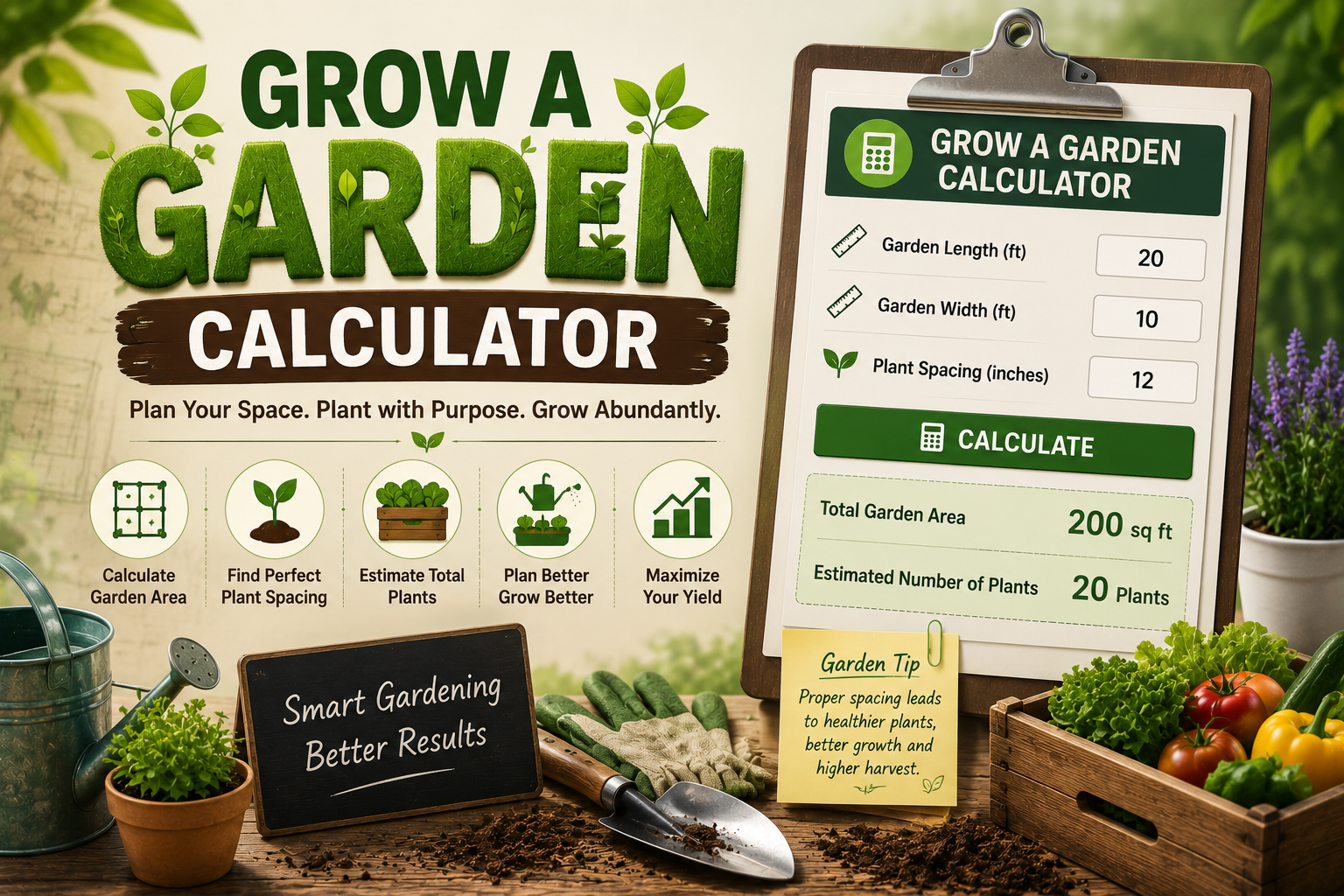
Garden Length = 20 feet
Garden Width = 10 feet
Garden Area = 20 × 10 = 200 square feet
The Grow A Garden Calculator performs this calculation automatically and then uses your plant spacing to estimate the number of plants that could fit within that area.
Example of Using the Grow A Garden Calculator
Suppose you have a rectangular garden that is 20 feet long and 10 feet wide, and you want to use 12-inch plant spacing.
- Garden length = 20 feet
- Garden width = 10 feet
- Plant spacing = 12 inches
- Garden area = 200 square feet
- 12 inches = 1 foot
With one-foot square spacing, the simple area-based estimate is approximately 200 plants. In an actual garden, the practical number may be lower because you may need paths, borders, access space, and additional room depending on the crop.
Garden Planning Tips
A calculator is useful for estimating capacity, but good garden planning involves more than mathematics. Consider the growing conditions and the mature size of your plants before finalizing the layout.
- Choose a location with suitable sunlight.
- Check the mature size of each plant.
- Follow crop-specific spacing recommendations.
- Leave enough room for walking and maintenance.
- Use healthy, well-draining soil where appropriate.
- Plan irrigation and watering access.
- Consider crop rotation for vegetable gardens.
- Keep records of what you plant each season.
How to Maximize Garden Space
Gardeners with limited space can use careful planning to make their available growing area more productive. Raised beds, vertical growing systems, trellises, and suitable compact varieties can help organize plants efficiently.
However, maximizing the number of plants should not mean ignoring recommended spacing. A garden packed too tightly can become harder to water, weed, inspect, and harvest.
Grow A Garden Calculator for Raised Beds
The calculator can also be used as a starting point for raised-bed planning. Simply measure the length and width of the planting area and enter the approximate spacing required by your crop.
If your raised bed includes permanent paths or areas that cannot be planted, subtract those areas from the available growing space before making your final planting plan.
Grow A Garden Calculator in Canada
Garden planning can be especially useful for Canadian gardeners because growing conditions vary considerably across the country. Temperature, frost dates, daylight, soil conditions, and growing seasons can differ between regions.
The calculator can help estimate planting capacity, but Canadian gardeners should also consider their local growing season and choose crops and varieties suitable for their area.
Who Can Use This Garden Calculator?
This calculator can be useful for anyone who wants a quick estimate of garden capacity before purchasing seeds or plants.
- Home gardeners
- Vegetable gardeners
- Flower gardeners
- Herb growers
- Raised-bed gardeners
- Community garden users
- Students learning about gardening
- Garden planners and landscapers
Important Things to Remember
The estimated plant count is based on a simple area calculation. Real planting layouts may produce different results because gardens can have irregular shapes, paths, borders, trellises, access areas, and different plant-spacing requirements.
For the most practical result, use the calculator together with the spacing instructions supplied for your specific crop or plant variety.
Frequently Asked Questions
1. What is a Grow A Garden Calculator?
A Grow A Garden Calculator is a planning tool that estimates garden area and approximate planting capacity using garden dimensions and plant spacing.
2. Is the Grow A Garden Calculator free?
Yes. This calculator is free to use and can be used to estimate garden space and plant capacity.
3. Can I use this calculator for vegetables?
Yes. You can use it for vegetables, herbs, flowers, fruits, and other plants as long as you know the approximate spacing required by the plant.
4. Why is plant spacing important?
Proper spacing gives plants enough room for growth and can make sunlight access, airflow, watering, and maintenance easier.
5. Can I use it for a raised garden bed?
Yes. Enter the length and width of the plantable portion of the raised bed to estimate its planting capacity.
6. Does the calculator work for flower gardens?
Yes. You can use it for flower beds by entering the approximate spacing recommended for the flowers you are growing.
7. Is the plant count exact?
No. The plant count is an estimate based on the entered garden dimensions and square-spacing assumption. Actual capacity can vary depending on the garden layout and plant requirements.
8. Can Canadian gardeners use this calculator?
Yes. The calculator can be used by gardeners across Canada. Local growing conditions and crop recommendations should still be considered when planning a garden.
9. What units does the calculator use?
Garden length and width are entered in feet, while plant spacing is entered in inches.
10. How is garden area calculated?
For a rectangular garden, the area is calculated by multiplying the garden length by the garden width.
Related Calculators
Final Thoughts
A Grow A Garden Calculator makes garden planning easier by helping you estimate the available growing area and approximate number of plants that can fit within that space. Whether you are planning a vegetable garden, flower bed, herb garden, or raised bed, knowing your available space can help you make better planting decisions.
For the best results, use the calculator as a starting point and combine the estimate with the recommended spacing for each specific plant. With careful planning, you can make efficient use of your garden space while still giving your plants the room they need to grow successfully.