
GIS Group Calculator Canada
Use this GIS Group Calculator to estimate your Guaranteed Income Supplement (GIS) group based on your marital status and income category. This tool is designed for Canadian seniors who want a quick indication of which GIS income group may apply to their situation.
GIS Group Calculator
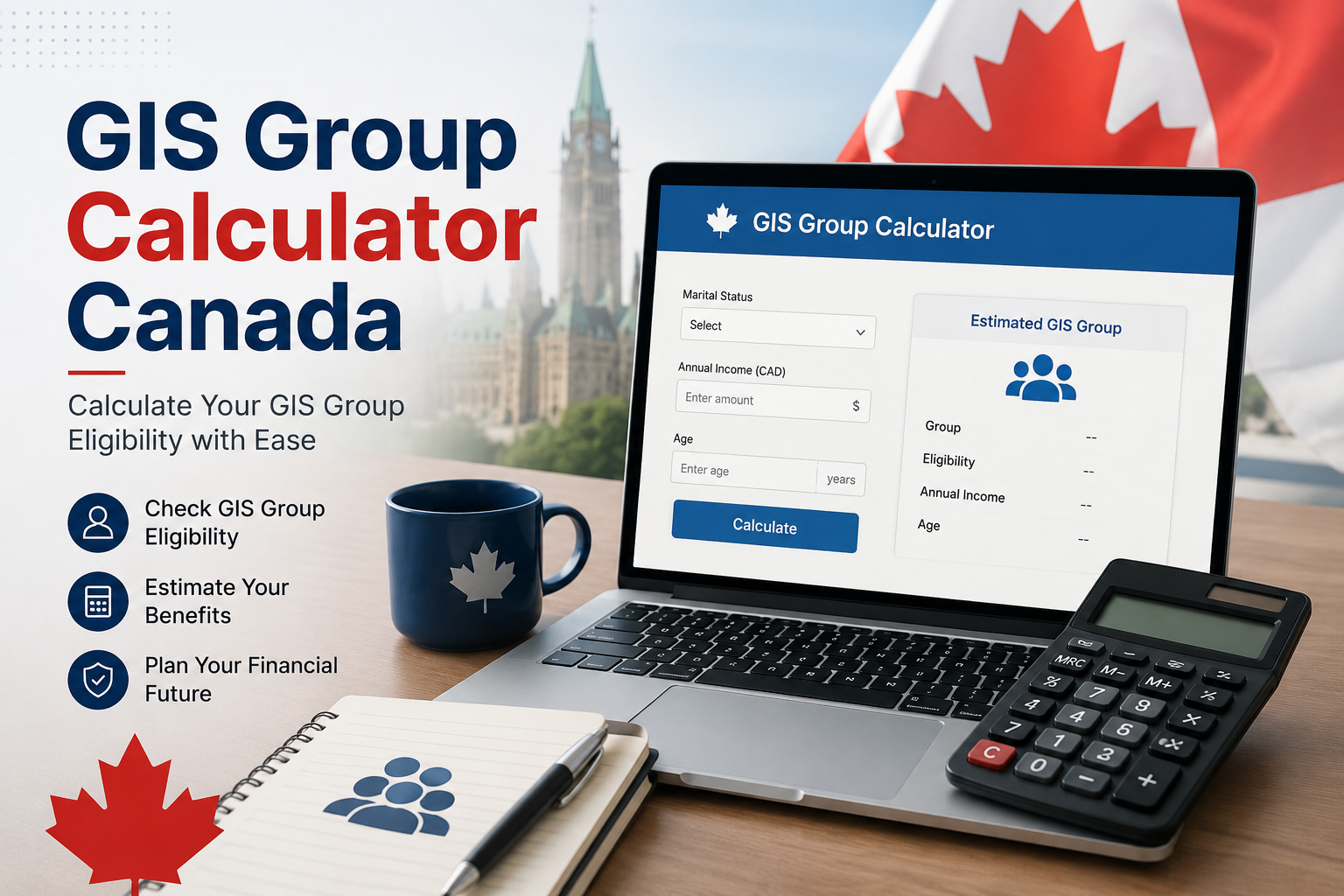
What Is the GIS Group Calculator?
The GIS Group Calculator is a simple estimation tool that helps Canadian seniors understand which Guaranteed Income Supplement (GIS) category may apply to their financial situation. GIS is an important federal benefit available to low-income seniors who already receive Old Age Security (OAS).
Because GIS payments vary according to income level and marital status, many retirees find it difficult to determine where they fit within the program. This calculator simplifies the process by providing an estimated GIS group based on basic information entered by the user.
While the tool does not replace official calculations performed by the Government of Canada, it can help seniors gain a better understanding of their potential eligibility before applying for benefits.
How the GIS Program Works in Canada
The Guaranteed Income Supplement is a monthly non-taxable benefit provided to eligible Canadian seniors. The amount received depends on several factors, including:
- Annual income
- Marital status
- Whether a spouse receives OAS or GIS
- Current GIS payment thresholds
- Federal benefit rules and updates
Generally, seniors with lower incomes receive larger GIS payments, while those with higher incomes may receive reduced benefits or become ineligible.
Who Can Qualify for GIS?
To qualify for GIS, individuals generally must:
- Be 65 years of age or older
- Receive Old Age Security (OAS)
- Meet annual income requirements
- Reside in Canada or meet residency rules
Eligibility is reassessed annually based on income information reported through tax returns.
Why Use a GIS Group Calculator?
Many retirees are uncertain about how household income impacts GIS eligibility. A GIS calculator can provide a quick estimate without requiring complex government worksheets.
Benefits of using this calculator include:
- Quick eligibility estimation
- Easy income assessment
- Simple marital status comparison
- Retirement planning assistance
- Better understanding of GIS categories
- Convenient financial planning tool
Factors That Affect GIS Benefits
Several variables influence GIS entitlement:
1. Annual Income
The lower the income, the higher the potential GIS payment. Income remains the most important factor in determining eligibility.
2. Marital Status
Single seniors, married seniors, and common-law partners may fall into different GIS categories.
3. Spousal Benefits
Whether a spouse receives OAS, GIS, or neither can significantly impact benefit calculations.
4. Annual Tax Filing
Canadian seniors should file tax returns every year because GIS eligibility is often reassessed using tax information.
GIS Planning Tips for Canadian Seniors
- File taxes before the deadline each year.
- Review retirement income sources regularly.
- Understand how withdrawals can affect GIS eligibility.
- Monitor annual government threshold updates.
- Keep records of pension and investment income.
- Use calculators to estimate future benefit changes.
Benefits of Understanding Your GIS Group
Knowing your GIS group can help you:
- Plan retirement finances more effectively
- Estimate monthly government support
- Avoid unexpected benefit reductions
- Understand income thresholds
- Prepare for future retirement decisions
Frequently Asked Questions (FAQ)
1. What does GIS stand for?
GIS stands for Guaranteed Income Supplement, a federal benefit available to eligible low-income seniors in Canada.
2. Is GIS taxable income?
No. GIS payments are generally considered non-taxable benefits.
3. Can I receive OAS and GIS together?
Yes. GIS is typically paid in addition to Old Age Security benefits for eligible seniors.
4. Does marital status affect GIS eligibility?
Yes. Marital status is one of the primary factors used when determining GIS payment amounts and eligibility.
5. How often is GIS recalculated?
GIS eligibility is generally reassessed annually using income information from tax returns.
6. Can my GIS payment change from year to year?
Yes. Changes in income, marital status, and government thresholds may affect GIS payments.
7. Do I need to file taxes to receive GIS?
In most situations, filing annual income taxes is important because eligibility calculations rely on reported income.
8. Is this calculator an official Government of Canada calculator?
No. This calculator provides an estimate only and should not replace official eligibility determinations.
Final Thoughts
The GIS Group Calculator helps Canadian seniors quickly estimate their potential Guaranteed Income Supplement category based on age, income, and marital status. Understanding your GIS group can improve retirement planning, support better financial decisions, and provide a clearer picture of potential government benefits. For official benefit calculations and eligibility confirmation, always refer to the Government of Canada and Service Ca