
Enter your body measurements below to estimate your body shape category.
What Is a Body Shape Group Calculator?
A Body Shape Group Calculator is an online tool that estimates a person's body shape using measurements such as the shoulders, bust or chest, waist, and hips. Rather than focusing only on body weight, the calculator looks at the relationship between different body measurements to identify a general body-shape category.
Body shape calculators are commonly used for personal styling, clothing selection, fashion planning, and understanding body proportions. The result can provide a convenient starting point when choosing clothing styles that complement an individual's natural proportions.
This Body Shape Group Calculator uses measurements in inches and compares the relative proportions of the upper body, waist, and hips. The calculator can estimate categories such as hourglass, pear, inverted triangle, rectangle, or apple shape.
It is important to remember that body-shape categories are simplified descriptions. Human bodies come in many different proportions, and not everyone will fit neatly into one category.
How Does the Body Shape Calculator Work?
The calculator compares your bust or chest measurement, waist measurement, and hip measurement to identify the relative distribution of your measurements. Shoulder measurements can also provide additional information about the upper-body proportion.
For example, a person with relatively similar bust and hip measurements and a substantially smaller waist may fall into an hourglass category. Someone with noticeably wider hips than the bust may be classified as pear-shaped, while broader shoulders or chest compared with the hips may indicate an inverted triangle pattern.
These categories are estimates rather than strict scientific classifications. Small differences in measurement technique can also change the result, so measurements should be taken carefully and consistently.
Common Body Shape Categories
Hourglass Body Shape
The hourglass shape generally has relatively balanced bust and hip measurements with a noticeably smaller waist. The upper and lower portions of the body appear more proportionally balanced, while the waist provides greater definition.
People in this category may find that clothing designed to follow the natural waist creates a balanced appearance, although individual preferences and body proportions should always guide clothing choices.
Pear Body Shape
A pear-shaped body generally has hips that are wider than the bust or chest. The lower body may appear more prominent compared with the shoulders and upper torso.
When shopping for clothing, people with this proportion may choose different sizes for tops and bottoms depending on their measurements. Understanding individual measurements can make clothing selection easier.
Apple Body Shape
An apple body shape generally has more measurement around the midsection and a less defined waist compared with the bust and hip proportions. Body proportions vary considerably, so this category should be viewed as a broad description rather than a precise classification.
Rectangle Body Shape
A rectangle body shape generally has relatively similar bust, waist, and hip measurements, creating a straighter appearance. The difference between the waist and the other measurements may be less pronounced.
Inverted Triangle Body Shape
An inverted triangle shape generally has a broader upper body compared with the hips. The shoulders or chest may be noticeably wider than the lower-body measurement.
This proportion can occur naturally and can also be influenced by muscular development, particularly around the shoulders and upper back.
How to Measure Your Body Correctly
Accurate measurements are important when using any body shape calculator. Use a flexible measuring tape and measure while standing naturally. The tape should remain level around the body without being pulled excessively tight.
1. Shoulder Measurement
Measure around the widest portion of the shoulders or upper body according to the measurement method you normally use. Keep the tape level and avoid pulling it too tightly.
2. Bust or Chest Measurement
Measure around the fullest part of the bust or chest. Keep the tape horizontal and stand naturally without intentionally expanding or contracting the chest.
3. Waist Measurement
Measure around the narrowest part of the torso. Do not pull your stomach inward while taking the measurement. Keep your body relaxed and breathe normally.
4. Hip Measurement
Measure around the fullest part of the hips and buttocks. Keep the tape level around the body for a consistent measurement.
Body Shape vs. Body Weight
Body shape and body weight describe different aspects of the body. Weight represents total body mass, while body shape focuses more on the relative proportions of different areas.
Two people can have the same body weight but very different measurements and body proportions. Similarly, people with different body weights can have similar proportions. This is why a body shape calculator does not require your weight.
| Factor | Body Shape | Body Weight |
|---|---|---|
| Measures body proportions | Yes | No |
| Measures total body mass | No | Yes |
| Useful for clothing selection | Yes | Limited |
| Useful for styling | Yes | No |
| Describes body proportions | Yes | No |
Why Knowing Your Body Shape Can Be Useful
Understanding body proportions can be useful when selecting clothes and experimenting with different styles. Instead of choosing clothing solely according to general size labels, you can consider how different garments fit across the shoulders, chest, waist, and hips.
- Helps with clothing selection.
- Can make online clothing shopping easier.
- Provides useful information for personal styling.
- Helps you understand your body proportions.
- Can assist with choosing different clothing cuts.
- Provides a simple way to compare measurements over time.
Body Shape Calculator for Women and Men
Body shape analysis can be used by both women and men. The basic idea is the same: compare different body measurements to understand relative proportions.
However, the shape categories and measurement patterns may not describe every body equally well. Men and women can have different typical body proportions, and muscular development can also influence shoulder, chest, waist, and hip measurements.
For this reason, the result from this calculator should be treated as a general estimate rather than a definitive classification.
Can Your Body Shape Change Over Time?
Yes. Body proportions can change throughout life. Changes in body weight, muscle development, aging, pregnancy, physical activity, and other factors can affect measurements around the shoulders, chest, waist, and hips.
If you are tracking your measurements over time, use the same measurement technique each time. This makes comparisons more consistent.
Body Shape and Clothing Choices
Body shape information can be useful when experimenting with clothing styles, but there are no universal rules about what someone should or should not wear. Personal comfort and individual preference are more important than fitting into a particular body-shape category.
Knowing your measurements can nevertheless help you compare garment measurements, select sizes, and understand why certain cuts fit differently across the shoulders, waist, or hips.
Tips for Taking More Accurate Measurements
- Use a flexible measuring tape.
- Measure over light clothing or directly on the body where appropriate.
- Keep the tape level around your body.
- Do not pull the tape excessively tight.
- Stand naturally while measuring.
- Do not hold your stomach in during the waist measurement.
- Take each measurement more than once if necessary.
- Use the same measurement method when tracking changes.
Body Shape Calculator for Canada
If you are looking for a Body Shape Calculator in Canada, this online tool provides a simple way to estimate your body-shape category using measurements in inches. It can be useful when comparing clothing measurements or exploring personal styling options.
Canadian clothing brands can use different sizing charts, so body shape and clothing size should not be confused. A person's body shape does not automatically determine their clothing size. Always check the individual retailer's size chart when shopping online.
Does Body Shape Determine Health?
Body shape alone cannot determine whether a person is healthy or unhealthy. A simple body-shape category does not measure blood pressure, fitness, body composition, nutrition, metabolic health, or other clinical factors.
Some patterns of fat distribution may be studied in relation to health outcomes, but a general body-shape calculator should not be used as a medical assessment or diagnosis.
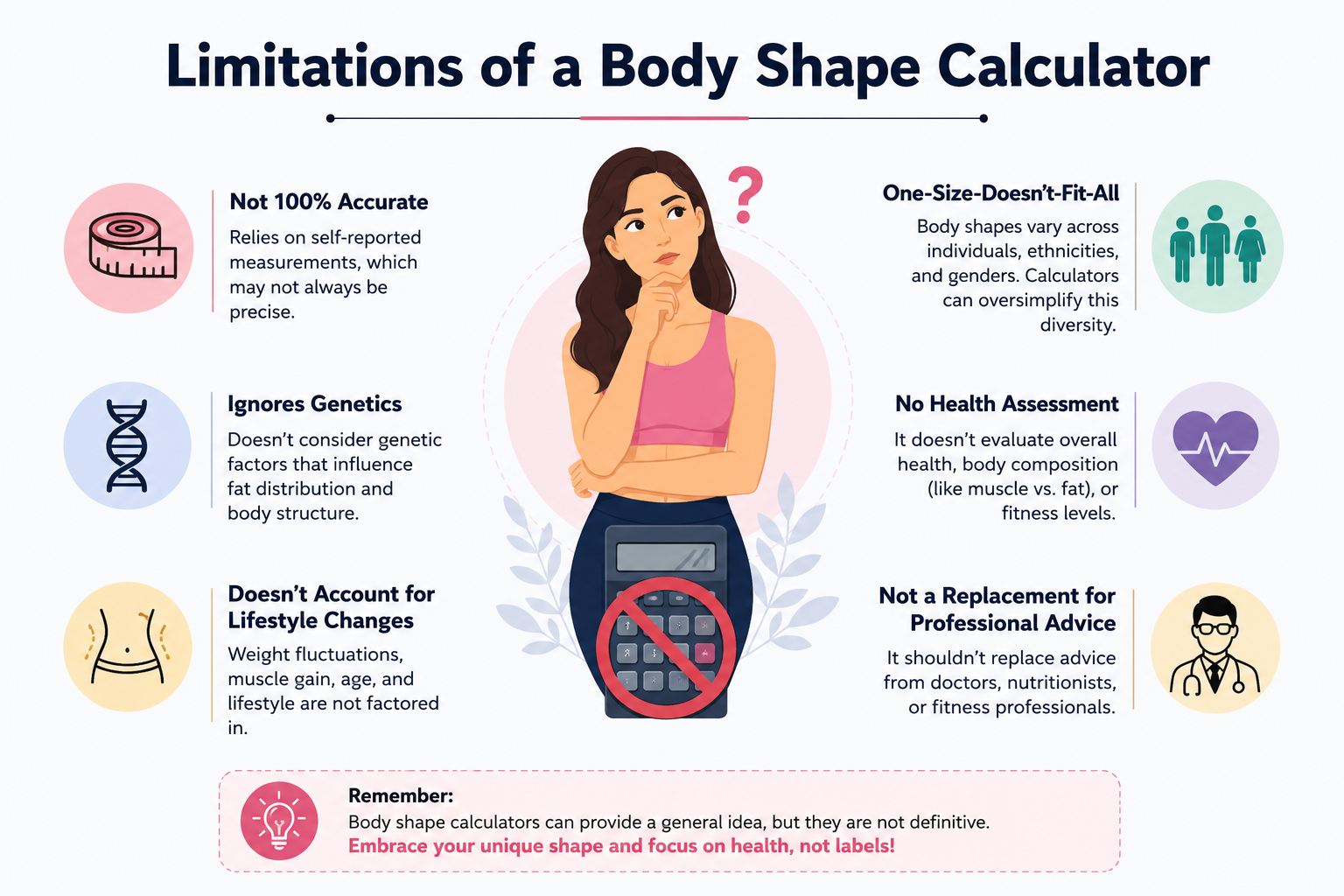
Limitations of a Body Shape Group Calculator
A body shape calculator is a simplified estimation tool. Human body proportions are highly individual, and many people do not fit perfectly into one of the commonly used categories.
Measurement technique, posture, muscle mass, clothing, body composition, and natural variation can all affect the result. Therefore, the calculator should be used for general informational and styling purposes rather than as a medical or professional body-composition assessment.
Frequently Asked Questions About Body Shape Calculators
1. What is a Body Shape Group Calculator?
A Body Shape Group Calculator is an online tool that estimates a person's general body-shape category by comparing measurements such as the bust or chest, waist, hips, and shoulders.
2. What measurements are needed for a body shape calculator?
This calculator uses four measurements: shoulder circumference, bust or chest circumference, waist circumference, and hip circumference. All measurements should be entered in inches.
3. What are the main body shape categories?
Common categories include hourglass, pear, apple, rectangle, and inverted triangle. These are simplified descriptions of body proportions and do not cover every possible body type.
4. Can body shape change over time?
Yes. Changes in body weight, muscle development, aging, pregnancy, physical activity, and other factors can change body measurements and proportions.
5. Is a body shape calculator accurate?
It can provide a useful estimate when accurate measurements are entered, but body-shape categories are not exact scientific classifications. Small measurement differences can also change the estimated category.
6. Can men use a body shape calculator?
Yes. Men can use body measurements to understand general body proportions. However, body-shape categories may not describe every male body type equally well.
7. Does body shape determine clothing size?
No. Clothing size depends on the brand, garment design, and individual measurements. Body shape can help with styling, but it does not determine a person's clothing size.
8. Can exercise change body shape?
Exercise can change muscle development and overall body composition, which may alter the appearance of body proportions. However, genetics and skeletal structure also play important roles.
9. Should I use body shape to evaluate my health?
No. Body shape is not a medical health assessment. Health involves many factors, including fitness, nutrition, medical history, body composition, and clinical measurements.
10. How often should I measure my body?
There is no universal schedule. If you want to track changes, measuring periodically using the same technique can make your comparisons more consistent.
Final Thoughts
The Body Shape Group Calculator provides a simple way to explore your body proportions using four basic measurements. By comparing your shoulders, bust or chest, waist, and hips, you can get an estimated body-shape category such as hourglass, pear, apple, rectangle, or inverted triangle.
Use the result as a general guide for understanding proportions, clothing selection, and personal styling. Since every body is different, the categories should not be treated as strict labels or medical classifications. Accurate measurements and individual comfort are more useful than relying on a single body-shape category.
```