Electricity Bill Calculator Canada
Estimate your monthly electricity bill using your electricity usage, electricity rate, fixed charges, other charges, and applicable tax.
Estimated Electricity Bill
This is an estimate based on the information entered. Actual electricity bills may include utility-specific rates, adjustments, rebates, credits, fees, taxes, and other charges.
What Is an Electricity Bill Calculator Canada?
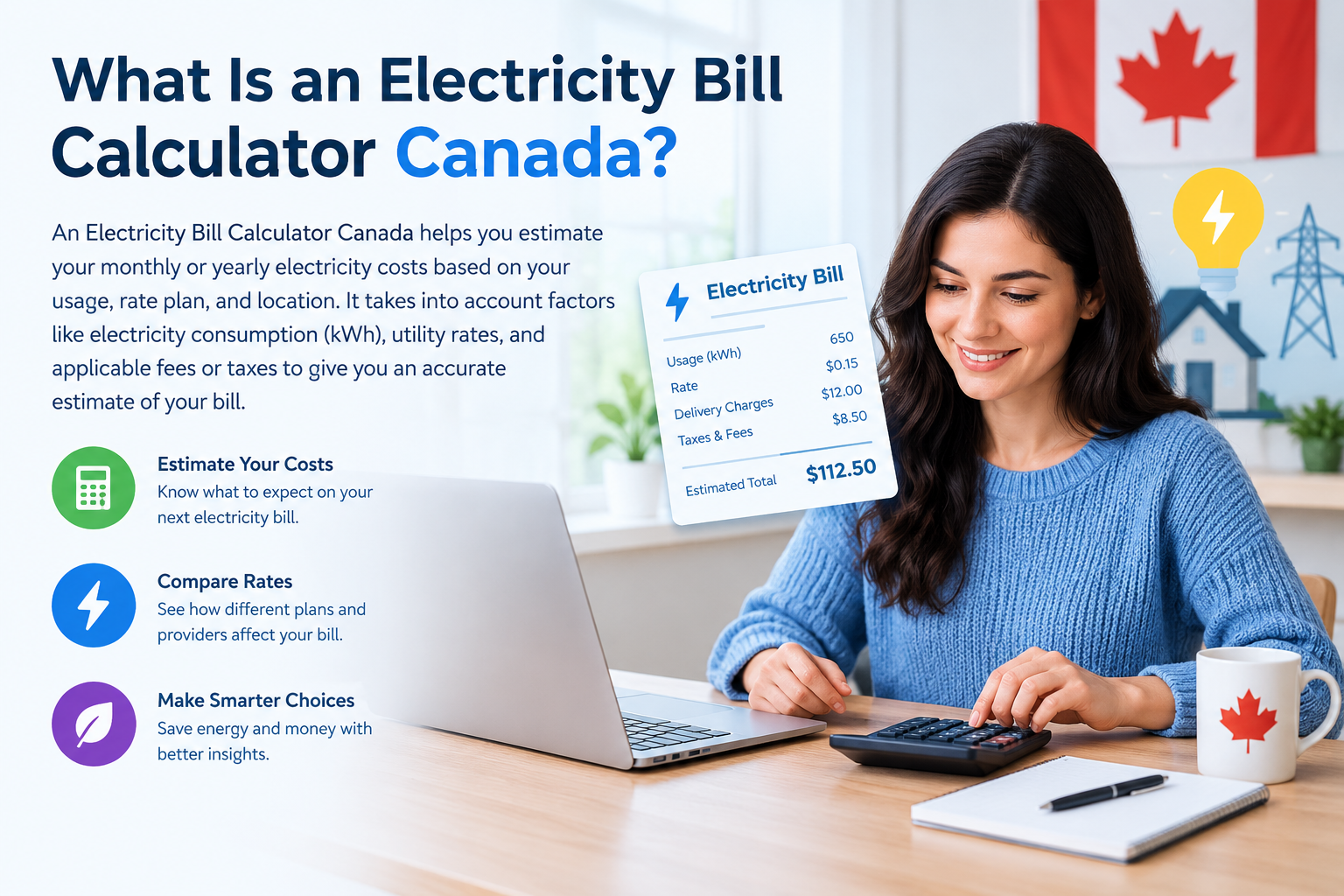
An Electricity Bill Calculator Canada is an online tool that helps estimate the cost of household electricity based on electricity consumption, the applicable electricity rate, fixed charges, delivery or other charges, and tax.
Instead of manually working through several figures on an electricity bill, you can enter your monthly electricity usage in kilowatt-hours (kWh), electricity rate, fixed charges, other charges, and applicable tax into the calculator above.
Electricity bills are not structured exactly the same way across Canada. The amount you pay can depend on your province or territory, electricity provider, rate plan, electricity consumption, delivery charges, and other billing components.
For this reason, this calculator allows you to enter the figures from your own electricity bill instead of assuming that one electricity rate applies to every Canadian household.
How Does an Electricity Bill Calculator Work?
The calculator uses your electricity consumption and electricity rate to calculate the energy cost. It then adds the fixed and other charges you enter and applies the tax percentage, if applicable.
For example, if your household uses 750 kWh in a billing period and the electricity rate you enter is 15¢ per kWh, the energy portion would be:
The calculator can then add fixed charges, delivery or other charges, and applicable tax to provide an estimated total monthly electricity bill.
What Is a Kilowatt-Hour (kWh)?
A kilowatt-hour (kWh) is a unit used to measure electrical energy consumption. One kilowatt-hour represents the amount of energy consumed by a 1,000-watt appliance operating for one hour.
For example, an appliance rated at 1,000 watts that operates for one hour uses approximately 1 kWh. Actual household electricity consumption depends on appliance power, operating time, heating and cooling requirements, weather, home size, and household habits.
Your electricity bill normally shows the amount of electricity consumed during the billing period in kWh. Checking your kWh usage is useful when comparing your electricity consumption from one month to another.
Why Does My Electricity Bill Change From Month to Month?
Your electricity consumption can change significantly from one billing period to another. Seasonal weather is one of the most common reasons for changes in household electricity use.
During very cold or very hot weather, heating and cooling systems may run more frequently. Household electricity use can also change because of guests, working from home, electric vehicles, new appliances, renovations, or changes in daily routines.
Your electricity rate and billing structure can also affect the final amount. Some electricity pricing plans can vary according to consumption levels or the time electricity is used.
Understanding the Main Parts of an Electricity Bill
1. Electricity or Energy Charge
The energy charge represents the electricity you consumed during the billing period. It is commonly calculated using the number of kWh used multiplied by the applicable electricity price.
2. Delivery Charges
Delivery charges are associated with the infrastructure and services used to deliver electricity through transmission and distribution systems. The terminology and structure can vary depending on the province and utility.
3. Fixed or Customer Charges
Some electricity bills include a fixed customer, basic service, or minimum charge. Unlike consumption-based charges, a fixed charge may not change directly with the number of kWh you use.
4. Regulatory and Other Charges
Depending on your location and utility, an electricity bill may include regulatory, system, adjustment, transmission, or other charges.
5. Taxes
Applicable taxes can affect the final amount payable on an electricity bill. The applicable tax treatment can depend on the location, utility, and type of charge.
Electricity Rates Are Different Across Canada
There is no single electricity rate that applies to every Canadian household. Electricity pricing can vary by province, territory, utility, rate plan, consumption level, and in some cases the time electricity is consumed.
This means that two households using the same amount of electricity can receive different bills because their electricity rates, fixed charges, delivery charges, taxes, or pricing structures may be different.
Ontario Electricity Bill Example
Ontario is an example of a province where eligible residential customers can have different electricity pricing plans. Depending on the customer's plan, electricity pricing can be affected by when electricity is used or by the amount of electricity consumed during the billing period.
Because electricity pricing structures and rates can change, this calculator does not automatically hard-code a current Ontario electricity rate. Instead, Ontario customers can enter the applicable rate and charges shown on their own electricity bill.
How to Use the Electricity Bill Calculator Canada
- Select your province or territory.
- Enter your monthly electricity usage in kWh.
- Enter your electricity rate in cents per kWh.
- Enter your monthly fixed or basic charges.
- Enter delivery or other charges if applicable.
- Enter the applicable tax percentage if you want tax included.
- Click Calculate Electricity Bill.
- Review the estimated monthly electricity bill.
For a more useful estimate, take the figures directly from a recent electricity bill. If your electricity provider provides detailed consumption information through an online account, you can also use that information to determine your monthly kWh usage.

How to Reduce Your Electricity Consumption
Reducing electricity consumption can help lower the consumption-based portion of your electricity bill. The amount you can save depends on your home, appliances, heating and cooling systems, electricity rate, and household habits.
Improve Heating and Cooling Efficiency
Heating and cooling can contribute substantially to household energy use. Proper maintenance, suitable indoor temperature settings, insulation, and efficient equipment can help reduce unnecessary electricity consumption.
Use Energy-Efficient Lighting
Replacing older lighting with more efficient lighting options can reduce the amount of electricity required for lighting, especially in rooms where lights are used frequently.
Pay Attention to High-Consumption Appliances
Electric water heaters, clothes dryers, ovens, heating equipment, and large air-conditioning systems can use substantial amounts of electricity. Identifying appliances that consume the most electricity can help you decide where energy-saving changes may have the greatest effect.
Monitor Your Monthly kWh Usage
Looking at your monthly kWh usage can provide useful information about electricity consumption. A higher bill does not always mean that the electricity rate increased. It may also result from higher consumption, additional charges, taxes, or a combination of factors.
Electricity Bill Calculator for Different Canadian Provinces
This Electricity Bill Calculator Canada can be used for general electricity planning in:
- Alberta
- British Columbia
- Manitoba
- New Brunswick
- Newfoundland and Labrador
- Nova Scotia
- Ontario
- Prince Edward Island
- Quebec
- Saskatchewan
- Yukon
- Northwest Territories
- Nunavut
The calculator does not automatically apply a province-specific utility rate. This is intentional because electricity pricing can differ between utilities, customer types, rate plans, and consumption patterns.
When using the calculator, enter the electricity rate and applicable charges from your current bill for a more relevant estimate.

Electricity Bill Planning Tips
- Check your actual kWh consumption instead of guessing.
- Use the electricity rate shown on your latest bill.
- Separate energy charges from fixed and delivery charges.
- Compare your kWh usage across different seasons.
- Check whether your utility uses tiered or time-based pricing.
- Review changes in rates, fees, rebates, credits, or adjustments.
- Check major appliances if your electricity consumption increases unexpectedly.
- Compare several months of electricity bills to identify longer-term trends.
Frequently Asked Questions About Electricity Bill Calculator Canada
1. What is an Electricity Bill Calculator Canada?
An Electricity Bill Calculator Canada is an online tool that estimates electricity costs using electricity consumption, the electricity rate, fixed charges, other charges, and applicable tax entered by the user.
2. How is an electricity bill calculated?
The energy portion is commonly calculated by multiplying electricity usage in kWh by the applicable price per kWh. Fixed charges, delivery charges, other fees, and applicable taxes can then affect the final amount payable.
3. What does kWh mean on an electricity bill?
kWh means kilowatt-hour. It is the unit used to measure electrical energy consumption. Your electricity bill normally shows the number of kWh used during the billing period.
4. Does this calculator use the same electricity rate for all of Canada?
No. Electricity rates and billing structures can vary across Canada. This calculator allows you to enter the rate shown on your own electricity bill rather than assuming one national electricity rate.
5. Does the calculator include delivery charges?
Yes. You can enter delivery or other charges separately. This allows the estimate to include charges that appear on your electricity bill outside the basic energy cost.
6. Why is my electricity bill higher in winter?
Electricity use can increase during winter because of heating, shorter daylight hours, weather conditions, and changes in household energy use. The actual effect depends on the home, heating system, weather, electricity pricing structure, and other factors.
7. Can I use this calculator for Ontario electricity bills?
Yes. Select Ontario and enter the kWh usage, electricity rate, and applicable charges from your electricity bill. Since Ontario has different electricity pricing plans, using the figures from your own bill provides a more relevant estimate.
8. Can I use this calculator for Alberta electricity bills?
Yes. Select Alberta and enter your electricity usage, electricity rate, fixed charges, other charges, and applicable tax. The result is an estimate and is not a replacement for the calculation used by your electricity provider.
9. Does using less electricity always reduce the entire bill?
Not necessarily. Consumption-based charges generally change when your electricity usage changes, while some fixed charges may remain the same. Your specific electricity bill structure determines which charges are affected by lower usage.
10. Is the result from this electricity calculator exact?
No. The calculator provides an estimate based on the numbers entered. Actual electricity bills may include utility-specific calculations, adjustments, credits, rebates, taxes, fees, and other charges that are not included in this basic estimate.
Final Thoughts
The Electricity Bill Calculator Canada provides a simple way to estimate your monthly electricity cost using your household electricity consumption and billing information. By entering your kWh usage, electricity rate, fixed charges, other charges, and applicable tax, you can get a clearer picture of your estimated electricity cost.
Because electricity pricing is not uniform across Canada, using the current figures from your local electricity bill is the most practical way to create an estimate. Comparing your kWh consumption over several months can also help you understand seasonal changes and identify unusual increases in electricity usage.